
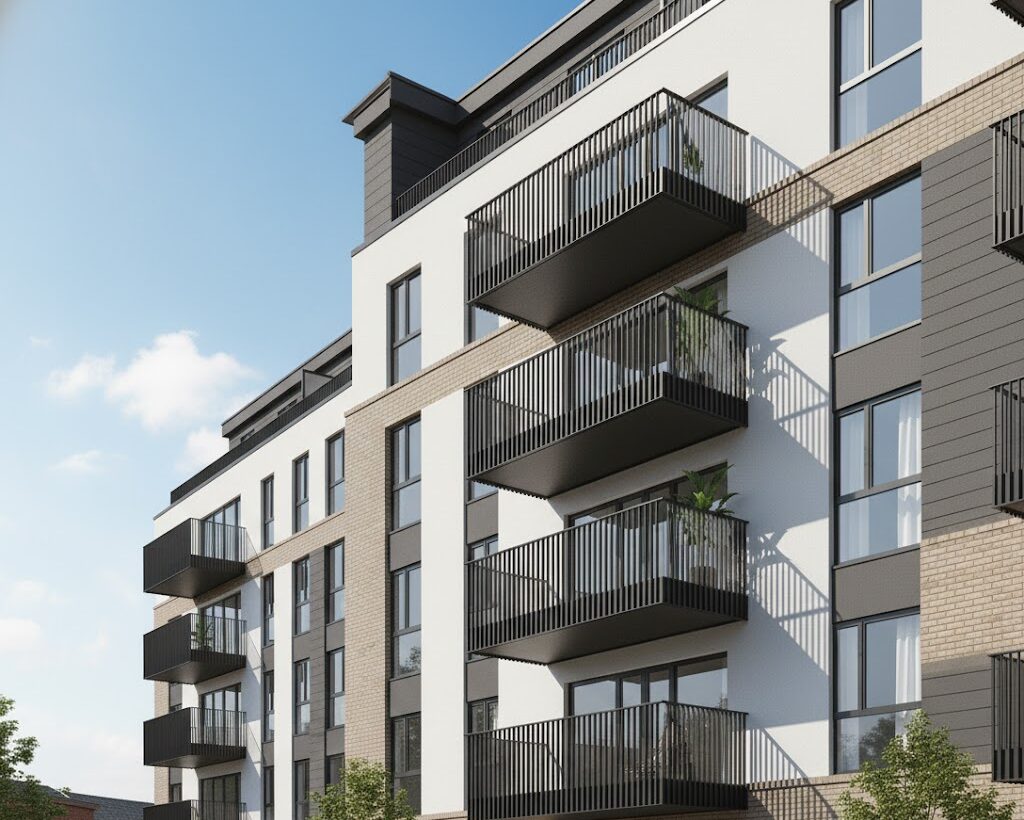
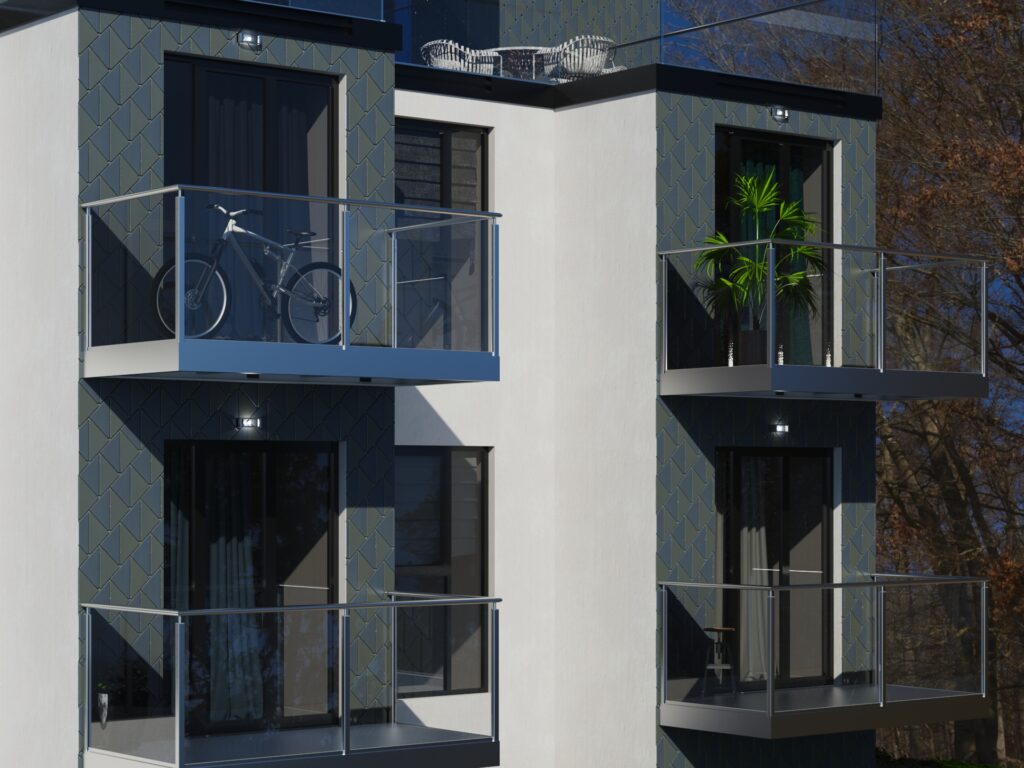

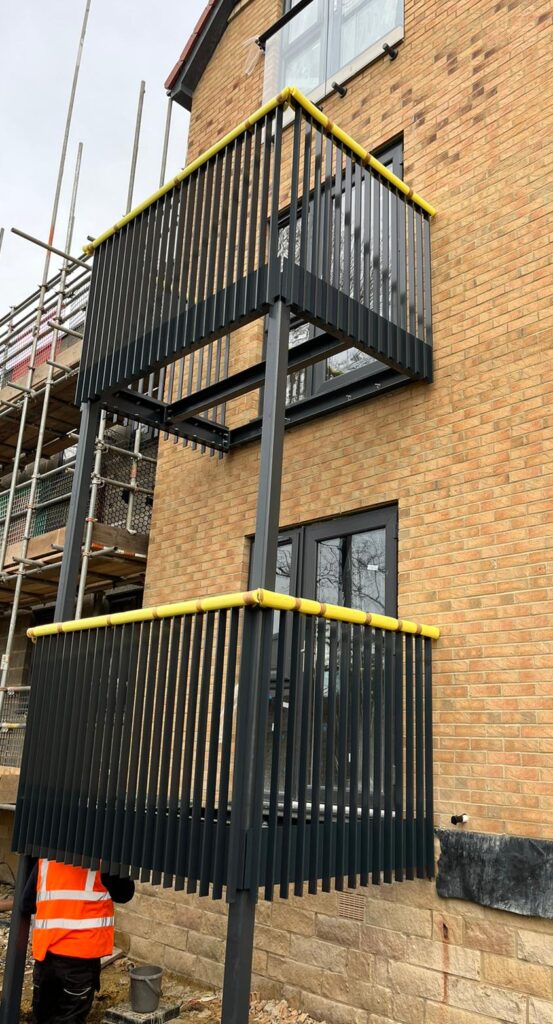
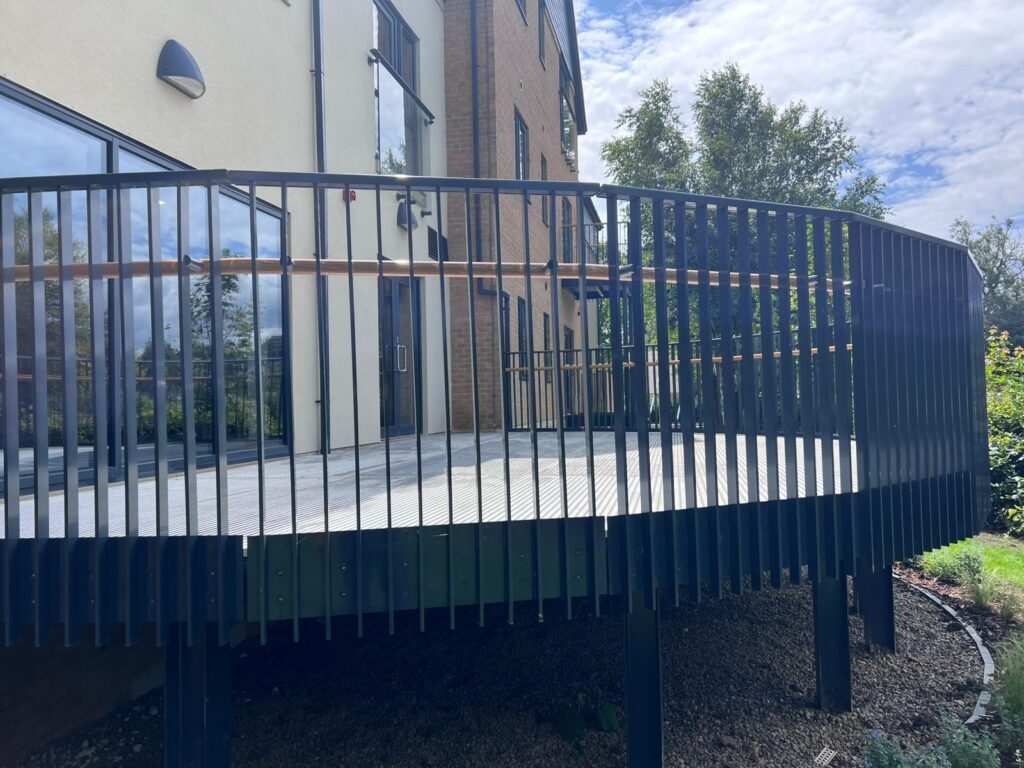

At Neaco, many of our products boast modularity, but what does this actually mean for you as a specifier? The [...]
Using thermal breaks for balconies
Among the many factors to consider in designing and choosing a balcony, its effect on the overall thermal performance of a building is one that you shouldn’t overlook. Balconies project from the thermal barrier of a building and pass through its envelope, which can create cold bridging. This can cause a number of problems:
High risk of internal condensation at cold points
Mould formation and damage on ceiling slabs caused by increased moisture
Buildings suffering from poor thermal performance which increases energy bills for renters/owners
Minimising the effect of cold bridging is required to comply with Part L Building Regulations. Many developments improvise measures to address bridging, but they are usually inefficient and unreliable. One such example is the insertion of insulating materials between reinforcement steel. Its effectiveness is limited as common steel and surrounding concrete continue to bridge. Another solution is to wrap or insulate the perimeter of the balcony, but this is often expensive and high-maintenance due to poor durability.
 The installation of specially designed thermal breaks is a much more effective way to address bridging problems with local insulation at the joint which prevents the flow of thermal energy between the inside and outside of a building. A component with low thermal conductivity is installed at the fixing point to impede the transfer between elements of high conductivity. They are designed to transfer loads, thereby therefore maintaining full structural integrity. The type of thermal break will vary according to the nature of the balcony cantilever/connector and the building fabric. For example, you will need different thermal breaks for concrete-to-concrete, concrete-to-steel, concrete-to-wood or steel-to-steel.
In one key respect anti-bridging design should follow the same principle as the design of the balcony itself: it is far more reliable and efficient to use standardised, pre-engineered components that are performance-tested at the factory stage and delivered on site ready to install. Much like balcony decking and balustrade, pre-engineered thermal breaks are more flexible, cost-effective, easier to specify and simpler to schedule than ad hoc solutions.
A number of specialist manufacturers supply off-the-shelf thermal breaks encompassing a wide range of standard options, including cast-in anchors which incorporate a thermal break. You can gain advice from these companies in consultation with your balcony supplier and other relevant contractors to ensure an appropriate solution for your installation.
We advise a modular approach to the design of balconies and the management of their impact on a building’s thermal performance. You should start with the balcony itself – using as many standardised components as possible, ideally within an all-in-one solution from a single supplier that can provide pre-tested performance and loading data. Having confirmed this data, you should consult a structural engineer to determine the appropriate cantilever and then choose a compatible thermal break from a specialist manufacturer.
Neaco manufactures a range of balconies which are suitable for a wide variety of building structures and work superbly in conjunction with thermal breaks to prevent thermal bridging. If you require advice on the subject of thermal breaks, our technical team would be delighted to provide a consultation to determine the best solution for your project.
