
What Are Bolt-On Balconies? A Guide for Architects and Developers
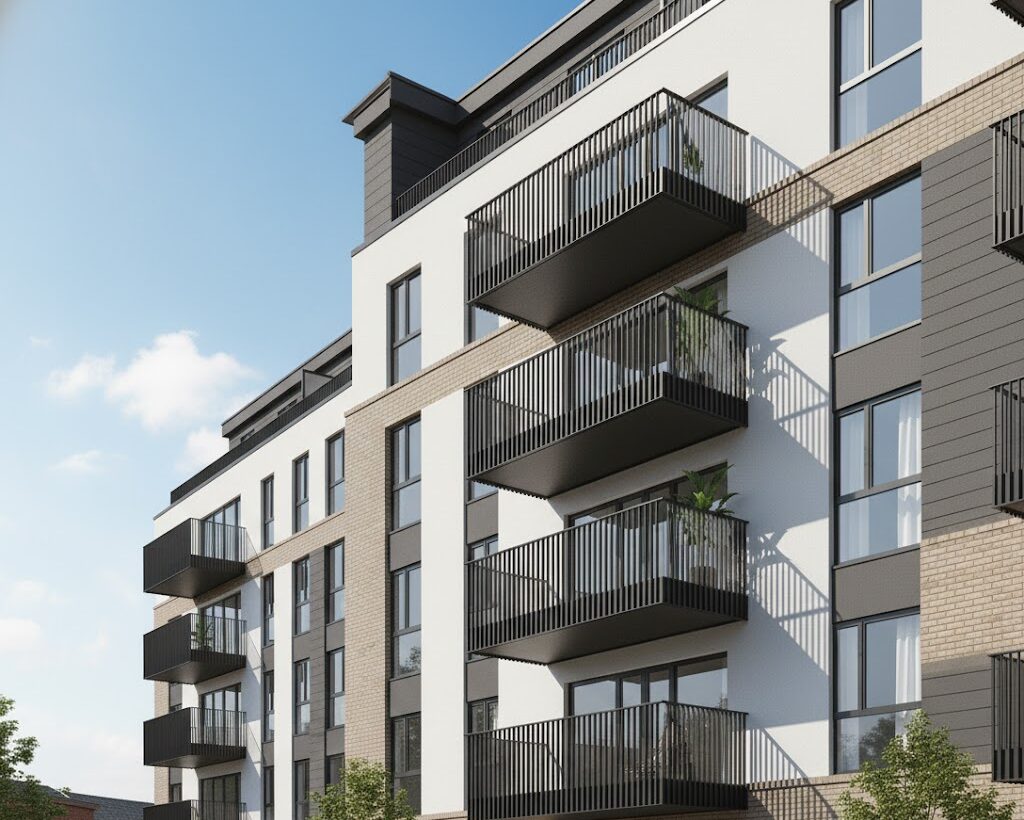
In modern construction, bolt-on balconies have become one of the most effective solutions for external access, outdoor space, and visual enhancement, particularly in UK residential and commercial developments. These modular balcony systems offer a reliable, regulation-compliant alternative to traditional designs, allowing for quicker installation, reduced site disruption, and increased design flexibility.
As a growing number of architects, specifiers, and developers look to incorporate safe and sustainable building features, bolt-on balcony systems have emerged as a smart choice for both new builds and refurbishment projects.
This guide will help you understand what bolt-on balconies are, how they work, and why they are increasingly preferred in the UK. Whether you are planning a residential bolt on balcony or a large-scale multi-unit project, this article is designed to provide technical insight with straightforward clarity.
What Is a Bolt-On Balcony?
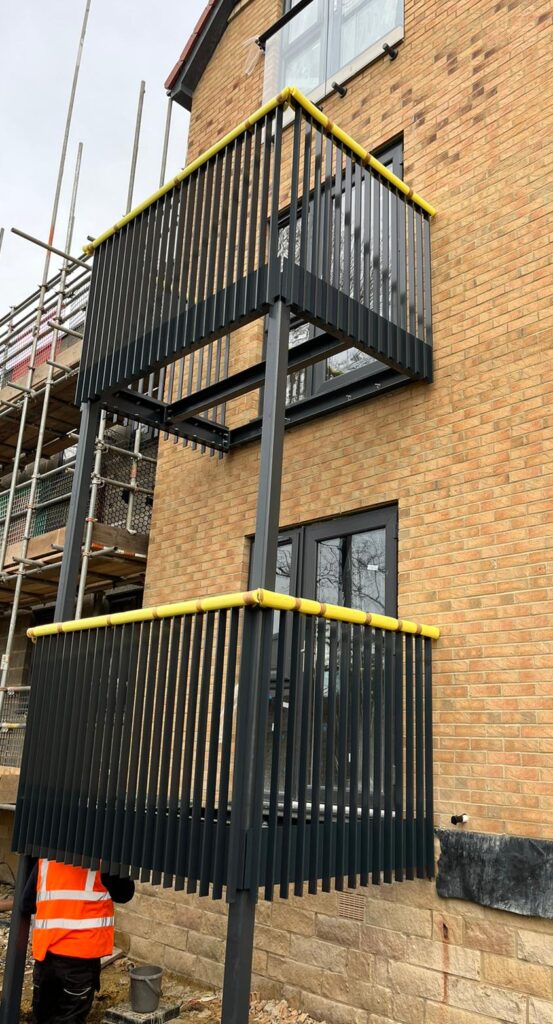
A bolt-on balcony is a pre-engineered, self-supporting platform that is fabricated off-site and later bolted directly to the main structure of a building. Unlike cast-in or cantilevered balconies, which are poured or built into the structure during early construction stages, bolt-on balconies are added afterward and require minimal coordination during core frame erection.
They are often referred to as:
- Pre-engineered balconies
- Modular balcony systems
- Offsite balcony solutions
These balconies are typically manufactured in steel or aluminium and can be fully assembled before being delivered to site. They are then mechanically fixed to the concrete floor slab or structural steel frame. This allows for the building’s envelope and interior works to continue without delay, improving the overall build programme.
Key Features and Components of Bolt-On Balconies
The design of a bolt-on balcony system incorporates several essential components, each of which contributes to the structural safety, usability, and visual appeal of the balcony.
-
Structural Frame
The main load-bearing element of a bolt-on balcony is its frame. Typically made of galvanised steel or aluminium, this frame supports the platform and transfers loads to the structural wall or slab. Aluminium frames are popular for their lightweight properties and superior corrosion resistance, especially in coastal or exposed environments.
-
Decking Surface
Decking forms the floor of the balcony. Options include aluminium planks, composite boards, or treated hardwoods. Aluminium decking is often chosen for its non-combustibility and durability. Many bolt on balcony components are now available in finishes that simulate timber aesthetics without the fire risk or maintenance concerns.
-
Balustrades and Guardrails
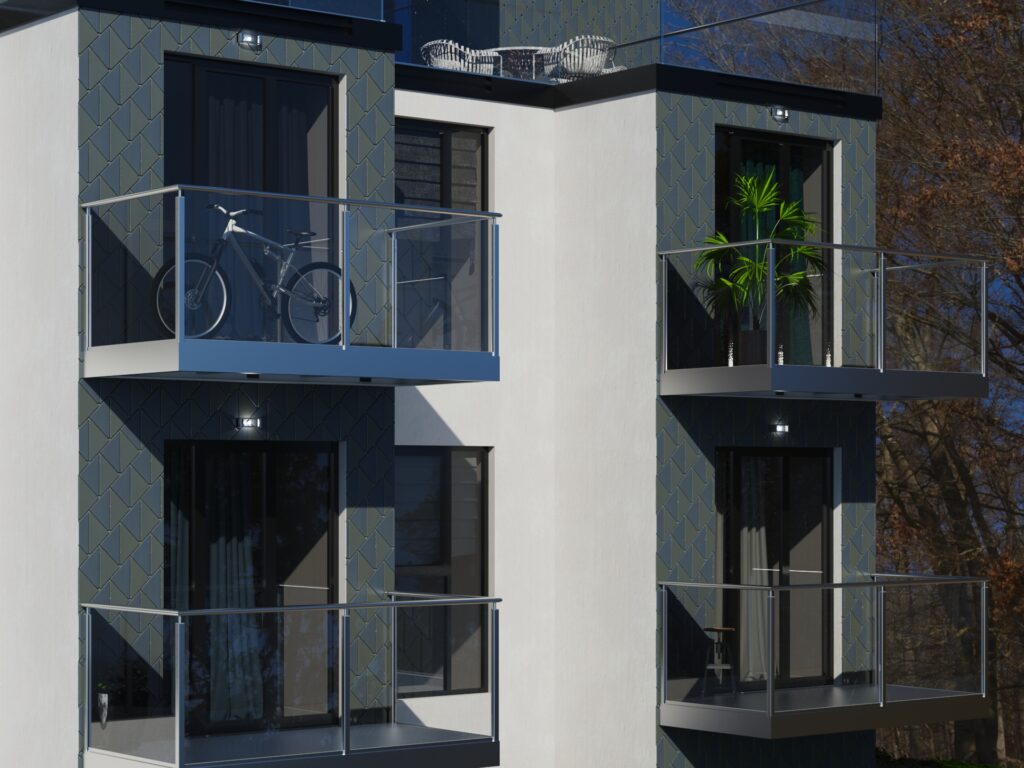
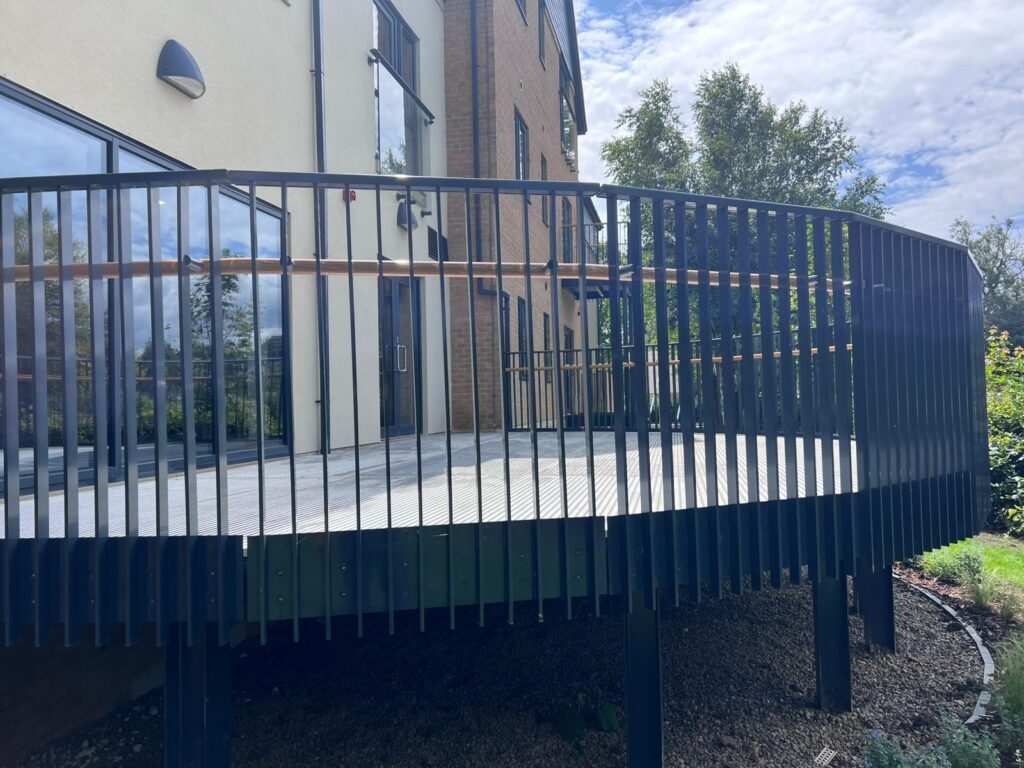
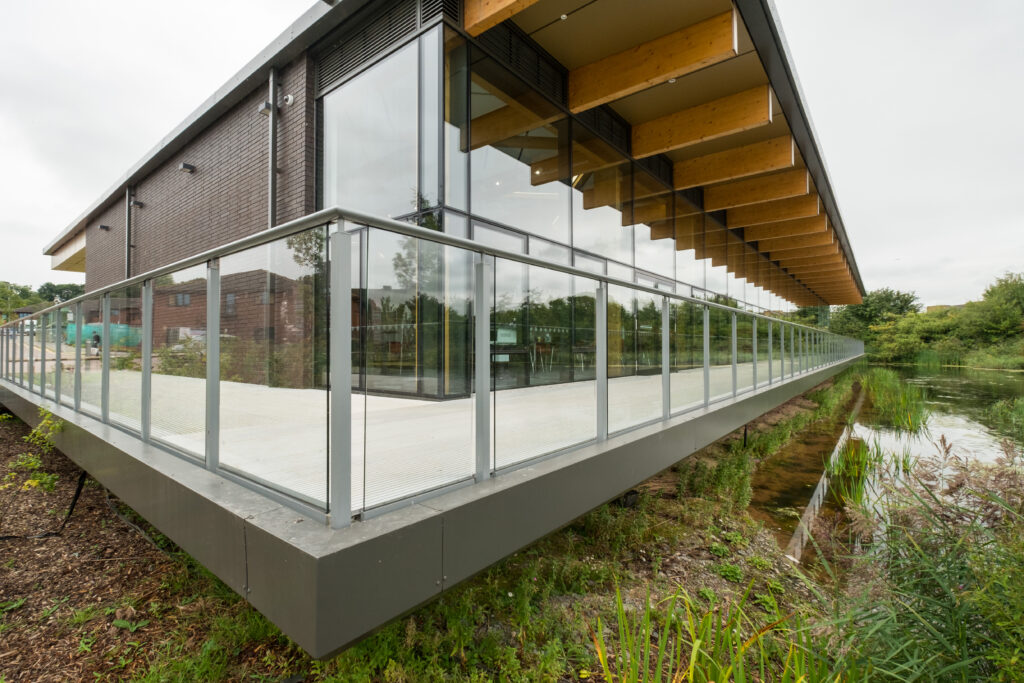
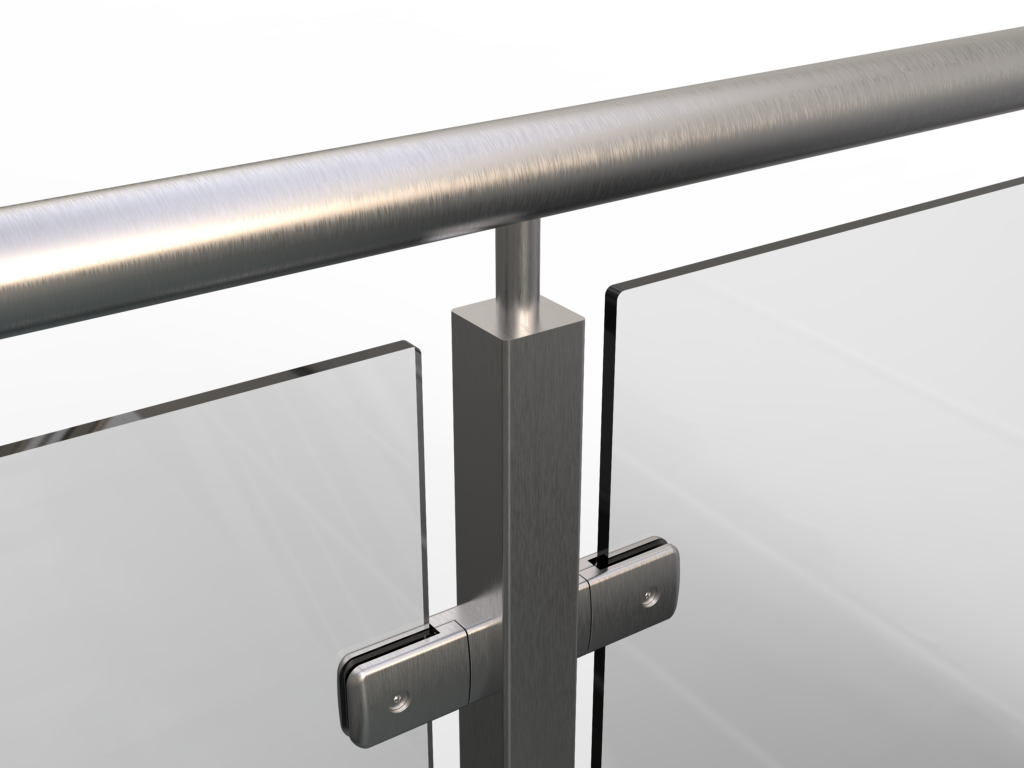
Safety balustrades are legally required on any raised platform. These may be glass (frameless or framed), metal vertical bars, or perforated metal sheets. A variety of finishes are available to complement modern or traditional façades. Balustrades can also serve acoustic and privacy purposes.
-
Fixing Brackets and Anchors
The integrity of any bolt-on balcony system depends heavily on how it is fixed to the main building structure. High-performance brackets and mechanical anchor bolts are specifically designed to handle a range of forces, including dead loads, live loads from occupants, wind pressure, and vibrations from daily use.
These components must be correctly positioned and installed to transfer loads safely into the structural frame or floor slab. Engineering calculations are used to determine the number and type of fixings required for each installation. A secure connection system ensures the balcony remains safe, stable, and compliant throughout its lifespan.
-
Drainage and Thermal Breaks
Modern bolt-on balcony systems are designed with integrated drainage channels to efficiently direct rainwater away from the building, helping to prevent water pooling and façade damage. In addition, they feature thermal break connections that significantly reduce cold bridging, improving the building’s energy efficiency and preventing condensation, damp patches, and potential mould growth on internal surfaces.
-
Modular Assembly
Bolt-on balconies are typically manufactured offsite as full or partially assembled modular units, allowing for precise fabrication under factory-controlled conditions. This modular approach significantly improves build quality while reducing the likelihood of errors during installation.
It also enables easier transportation, requires minimal on-site storage, and supports just-in-time delivery to align with the construction schedule. Once delivered, these modules can be quickly bolted onto the structure, streamlining installation and minimising disruption to other site activities or trades.
Benefits of Using Bolt-On Balcony Systems
The use of bolt-on balcony systems is rapidly growing in UK construction due to their numerous practical and performance-related advantages. From faster installation to improved safety and long-term compliance, these systems offer tangible benefits for architects, developers, contractors, and building owners.
-
Fast and Efficient Installation
One of the biggest advantages of bolt-on balconies is the speed of installation. Since most components are fabricated and partially or fully assembled offsite, there is minimal on-site work required. These units can be delivered to site on a just-in-time basis and installed within a matter of hours, rather than days.
This significantly reduces time spent working at height, frees up crane time, and helps keep the main construction schedule on track. This efficiency is especially valuable on projects with tight delivery deadlines or phased handovers.
-
Improved Site Safety
By reducing the need for on-site fabrication, welding, or cutting, bolt-on systems help to create a safer working environment. Most of the labour-intensive activities take place in controlled factory settings, lowering the risk of accidents and manual handling injuries.
Additionally, less scaffolding is required during installation, and there’s minimal disruption to other trades. This makes bolt-on balconies particularly well-suited for busy construction sites and refurbishment projects where maintaining site safety is paramount.
-
Consistent Quality and Finish
Producing balcony units offsite under factory-controlled conditions ensures a higher level of consistency and accuracy than traditional on-site methods.
Each balcony is built to the same specification and tolerances, which is essential for developments where repetition and uniformity are important, such as apartment blocks or student housing. This control also reduces the risk of weather-related delays or defects.
-
Design Versatility
Modern bolt-on balcony systems offer excellent architectural flexibility. They are available in a wide range of finishes, from powder-coated aluminium to wood-effect boards, and can be tailored to match the visual language of any building.
Balustrade options, fascia details, drainage solutions, and even curved or cantilevered designs can all be customised, enabling designers to meet planning conditions and achieve their aesthetic goals.
-
Retrofitting Capability
The lightweight, modular nature of bolt-on balconies makes them ideal for retrofit and refurbishment projects. They can be added to existing façades without significant structural intervention, offering a practical way to upgrade older buildings and enhance outdoor space for residents.
-
Fire Safety Advantages
In response to updated UK fire regulations, particularly for buildings over 18 metres, bolt-on balconies offer a major compliance benefit.
Systems using A1 or A2-rated aluminium decking meet stringent fire performance requirements under Approved Document B, providing peace of mind for developers and building control officers alike. Their non-combustible nature helps prevent fire spread through external walls or balconies, ensuring occupant safety.
Common Applications in UK Developments
Bolt-on balconies are now a standard solution across a wide variety of project types in the UK, each requiring a tailored approach depending on structure, scale, and occupancy.
-
Residential Flats and Apartments
Balconies are essential for providing private outdoor space. For schemes ranging from small blocks to high-density developments, residential bolt on balcony systems offer consistent design and fast installation.
-
Mixed-Use Developments
These projects often involve phased construction and tight deadlines. Pre-engineered balconies minimise disruption and allow for staggered delivery to meet programme milestones.
-
Student Accommodation and PRS Schemes
Given the volume and repetition in these projects, modular balcony systems provide a reliable solution that can be replicated across dozens or hundreds of units.
-
Public and Social Housing
Bolt-on balconies support government-led housing upgrades, offering improved living standards without requiring structural alterations. Their low maintenance also reduces lifecycle costs for councils and housing associations.
-
Refurbishment and Heritage Projects
Many mid-century buildings were constructed without private outdoor space. Bolt-on systems allow such features to be added retrospectively, improving building value and occupant wellbeing.
-
Concrete and Steel Framed Buildings
Thanks to their flexible fixing options, bolt-on balconies can be used on both steel-framed and concrete structures, accommodating a wide variety of build types.
Are Bolt-On Balconies Compliant With UK Regulations?
Yes, and regulatory compliance is one of their strongest advantages. Below are the key frameworks and regulations that apply to UK balcony systems.
-
Fire Safety – Building Regulations Part B
Following the Grenfell Tower fire, the UK Government introduced strict controls on the use of combustible materials. Part B of the Building Regulations stipulates that balconies on residential buildings over 18m must be made from non-combustible (Class A1 or A2-s1,d0) materials. Most bolt-on balcony systems now feature aluminium decking and frames to meet these rules.
-
NHBC Standards
The National House Building Council (NHBC) sets clear standards for balcony design, structural performance, fixings, and drainage. Systems must comply with deflection limits and live load requirements. Many reputable bolt on balcony suppliers build directly to NHBC specifications.
-
BS EN and CE/UKCA Certification
Products must meet:
- BS EN 1991-1-1 (Actions on structures)
- BS EN 1090 (Execution of steel structures)
- BS EN 13501-1 (Fire classification)
These standards are mandatory for CE or UKCA marking and ensure that the system is safe for use in UK buildings.
-
The Building Safety Act 2022
The Building Safety Act 2022 introduced in response to building safety failures, this Act reinforces accountability across the design and construction process. By using tested, certified bolt-on balconies, designers and developers reduce risk and ensure compliance.
Choosing the Right Supplier or System
The success of a bolt-on balcony installation often depends on selecting the right manufacturing partner. Here are some factors to consider when choosing from the many bolt on balcony manufacturers in the market:
-
Proven Regulatory Compliance
It is essential to ensure that the balcony system complies with UK Building Regulations, including fire safety requirements in Approved Document B. This is especially important for residential buildings above 18 metres, where non-combustible materials (A1 or A2-s1,d0) are mandatory.
Additionally, systems should meet relevant standards such as BS EN 1090 (structural steel execution) and BS EN 13501-1 (fire classification). Ask for appropriate test certificates, UKCA or CE marking, and NHBC compliance where applicable.
-
In-House Design and Engineering
Choose a supplier with in-house structural engineers and designers who can assist with load calculations, wind assessments, and customised CAD drawings. This ensures compatibility with your building’s structural frame and speeds up project approvals.
-
Material Quality
British-made aluminium or galvanised steel offers superior strength and durability. Ensure coatings such as powder coating or anodising meet performance and aesthetic requirements.
-
Installation Support and Warranty
A reliable bolt-on balcony UK supplier should offer more than just the product. Comprehensive installation support is essential, including clear method statements, fixing instructions, and optional on-site guidance to ensure safe and accurate assembly.
In addition, a robust warranty package should be provided, covering structural performance and material durability. Look for suppliers with a proven track record and the ability to offer ongoing technical advice and aftercare services once the installation is complete.
Why Choose Neaco’s Bolt-On Balconies?
Neaco is a trusted UK manufacturer with over 40 years of experience in delivering high-quality modular balcony systems. Their bolt-on balcony solutions are fully compliant with UK Building Regulations, including Approved Document B, and are tested to meet BS EN standards for structural integrity and fire performance.
Using precision-engineered aluminium components, Neaco balconies are lightweight, non-combustible, and corrosion-resistant—making them ideal for both new-build and refurbishment projects.
Neaco offers full technical support, from concept design and load calculations to bespoke finishes and installation guidance. Their systems arrive on-site ready for quick bolt-on installation, reducing build times and minimising disruption.
All products are manufactured in-house in the UK, ensuring consistent quality and shorter lead times. Whether you’re designing for residential, commercial, or mixed-use developments, Neaco’s bolt-on balconies combine safety, durability, and aesthetic flexibility, supported by decades of industry expertise and reliable aftercare.
Conclusion
As construction projects become more complex and safety regulations more demanding, bolt-on balconies offer a practical, compliant, and flexible solution. From high-rise developments to student accommodation and retrofits, they provide fast-track installation, excellent design options, and long-term durability.
Their modular design, offsite construction benefits, and regulatory compliance make them a top choice for specifiers across the UK. By partnering with the right supplier, you ensure peace of mind from planning through to installation.
Get a quote for a bolt-on balcony system.

